
09 November 2026
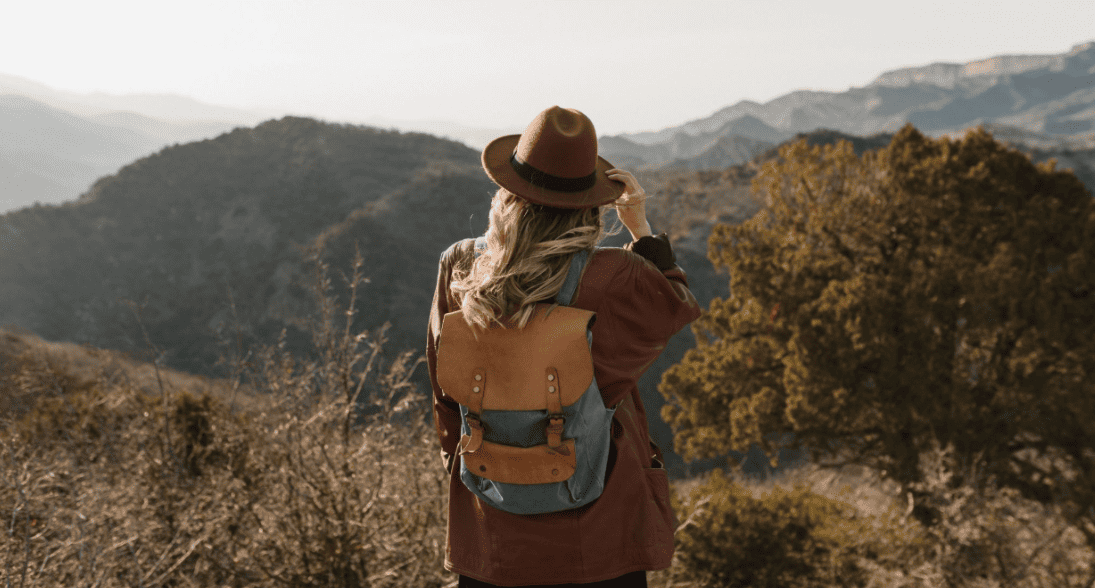
More and more women are choosing to travel alone these days. A Booking.com survey even found that 54 percent of the women surveyed planned to try solo travel in 2024, making it one of the fastest-growing travel trends (Global Rescue, 2024). Solo female travel is often promoted as a symbol of freedom and independence, the image of a woman brave enough to take full control over her own life and journey. But is that freedom really unconditional? How free is a woman, really, when she still has to constantly think about how she is perceived by others throughout her trip?
This question is not merely baseless suspicion. In a recent academic study titled "Respectability in Women's Solo Travel: A Critical Conceptualisation," Qiuyi Lyu and Neil Carr introduce the concept of respectability as an analytical framework for understanding how women's solo travel is judged, organized, and made possible by the society around them (Lyu & Carr, 2026). They argue that respectability operates through subtle, everyday carrot-and-stick mechanisms that ultimately turn women's freedom to travel into a conditional freedom, pushing women to discipline themselves (ibid.). In other words, women are indeed permitted to travel alone, but that permission comes with a long list of unwritten expectations about how they must behave while on the road.
Lyu and Carr explain that this respectability is read and negotiated through several different dimensions, from how others judge a woman's relationships with the people around her during her trip, to how the timing of her journey itself becomes material for social judgment (ibid.). Simply put, this means that expectations placed on the solo female traveler never really stop at the question of "is she allowed to travel alone or not." Those expectations extend much further, into what clothing is considered appropriate, what behavior is deemed polite, which places are acceptable to visit, how she should interact with unfamiliar men she meets, down to what time she should be back at her lodging. None of this is ever explicitly written into any rulebook, yet it remains very real as social pressure she is expected to comply with.
A similar anxiety was identified earlier by Erica Wilson and Donna Little, who termed this phenomenon the "geography of women's fear." Through in-depth interviews with a group of solo female travelers, they found that the fear women experienced during travel was not solely about concrete physical threats, but also about how they were perceived by others, a susceptibility to judgment, a sense of restricted mobility, and a feeling of being constantly conspicuous in an unfamiliar place (Wilson & Little, 2008). This research underscores that the burden carried by the solo female traveler is not just about physical safety, but also a psychological burden, since she must continuously manage her own image in public space.
The Indonesian context offers a more concrete picture of how this pressure plays out in practice. According to Inayah Hidayati, a population policy researcher at Indonesia's National Research and Innovation Agency, writing in an opinion column for Detik.com, Indonesian women's solo travel cannot simply be understood as a recreational activity, but rather as a social practice laden with negotiation (Hidayati, 2025). Drawing on her own research involving 25 Indonesian women who had traveled alone to various countries, Hidayati found that even a deeply personal trip still had to be negotiated with family first, with parental or partner approval often serving as an initial precondition before a woman was permitted to travel (Hidayati et al., 2025, as cited in Hidayati, 2025). In public spaces, Hidayati notes, women frequently confront gendered stereotyping, from stigmatizing labels such as "Asian woman" or "Muslim traveler," to verbal harassment, judgmental stares, and even cynical questions about the legitimacy of their traveling alone (ibid.). In other words, public space becomes an arena that is continuously contested, where every step a woman takes carries the added burden of having to prove and legitimize her own presence.
That said, it is important not to view solo female travelers solely as passive recipients of this kind of pressure. Hidayati herself notes that women actively create safe spaces for themselves through a range of strategies, such as building networks with fellow travelers, using assertive communication, and adjusting their body language to appear confident in front of strangers (Hidayati, 2025). This observation aligns with other academic findings on the meaning of solo travel for Asian women, which show that traveling alone gives women room to push back against gendered role stereotypes while reconstructing their identities outside the shadow of family (Yang et al., 2019). Solo travel, in other words, can also function as a practice of resistance, not merely as submission to restrictive social expectations.
Taken together, these academic findings make clear that the real issue is no longer simply whether women are allowed to travel alone. Society today, at least formally, has largely come to accept the presence of the solo female traveler. What is far less often questioned is whether a woman is truly free to decide how she wants to travel, what to wear, who to interact with, and what time to return, without first having to calculate how those choices will be judged by the people around her. As long as respectability remains an unwritten precondition for women's freedom of movement, that freedom itself has not yet become a fully realized right, but remains merely a permission that can be called into question at any moment.
Artikel ini diterbitkan di laman womentourism.id| 29 September 2026
Writer:
Auliya Putri Britania
An active undergraduate student majoring in Tourism at Gadjah Mada University with an interest in social, cultural, and sustainability issues.
Sources (all freely accessible, no login or subscription required):
-
Global Rescue, "Are More Women Traveling Without Men?" (2024), citing Booking.com Travel Trends 2024 data:https://www.globalrescue.com/common/blog/detail/solo-women-travel-increase/
-
Inayah Hidayati, "Menegosiasikan Ruang Lewat Perjalanan Solo Perempuan Indonesia" [Negotiating Space Through Indonesian Women's Solo Travel], Detik.com column (2025):https://news.detik.com/kolom/d-8148740/menegosiasikan-ruang-lewat-perjalanan-solo-perempuan-indonesia
-
The findings of Erica Wilson & Donna Little (2008) on the "geography of women's fear," and of Yang, Yang, & Khoo-Lattimore (2019) on the meaning of solo travel for Asian women, both discussed in this freely accessible (open access) paper: Chen, N. & Hsu, S., "Do Personal Values and Motivation Affect Women's Solo Travel Intentions in Taiwan?" (PMC/NCBI):https://pmc.ncbi.nlm.nih.gov/articles/PMC9811876/
-
Qiuyi Lyu & Neil Carr, "Respectability in Women's Solo Travel: A Critical Conceptualisation," Current Issues in Tourism (2026) — open access article:https://www.tandfonline.com/doi/full/10.1080/13683500.2026.2665277
Photo source: https://www.pexels.com/photo/pemandangan-lanskap-lansekap-liburan-7350872/